How to Dispose of or Recycle a CPAP Battery
Recycle or dispose of a lithium CPAP battery using EPA guidance, terminal protection, damage checks, and local drop-off programs.
By Max · Published August 2, 2026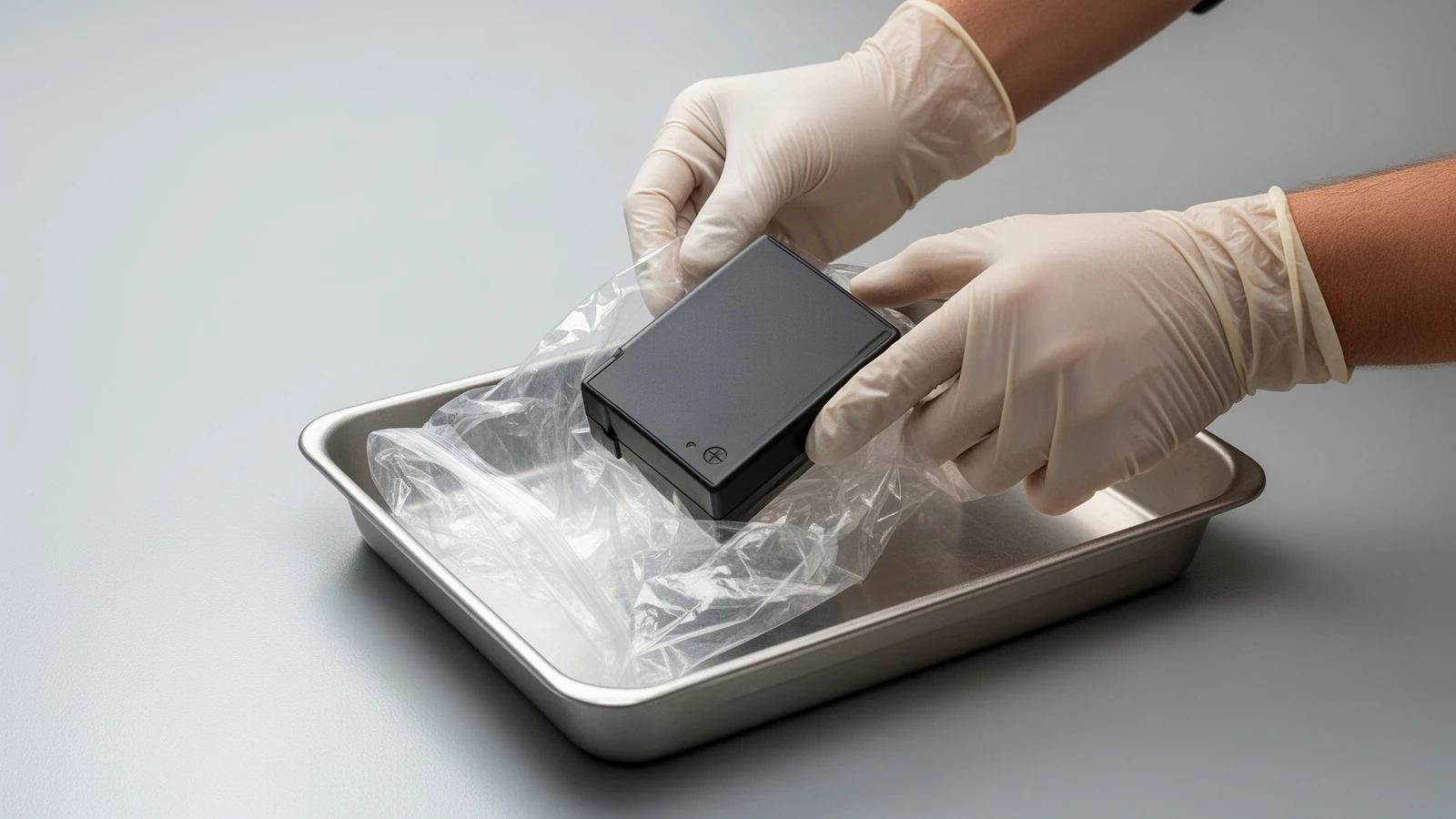
This is backup-power planning information, not medical advice. Follow your device manufacturer's instructions and ask your care team about treatment decisions.
Do not put a lithium CPAP battery in household trash or curbside recycling. EPA guidance says used lithium-ion batteries should go to separate recycling or household hazardous-waste collection points, not garbage or municipal recycling bins. The reason is simple: even a “dead” battery can still have enough energy to short, heat, or start a fire if crushed.
The right disposal path depends on the battery’s condition.
First: Identify The Battery
Many CPAP backup batteries and portable power stations use lithium-ion or LiFePO4 cells. Check the label and manual for lithium-ion, Li-ion, LiFePO4, LFP, lithium polymer, or rechargeable-lithium wording, along with the watt-hour rating and whether the pack is removable. If the chemistry is unclear, do not guess; ask the manufacturer or recycler how to route it.
An unidentified pack should be handled as potentially hazardous until the manufacturer or recycler gives instructions, without asserting a chemistry that the label does not establish.
Disposal Decision Tree
| Battery condition | What to do |
|---|---|
| Normal old battery, no swelling or damage | Tape exposed terminals, bag separately if practical, use a battery recycler or household hazardous-waste program |
| Battery inside a small CPAP pack | Contact manufacturer, battery recycler, or local HHW if the pack is not user-serviceable |
| Portable power station | Use manufacturer takeback, household hazardous waste, or a recycler that accepts higher-capacity packs |
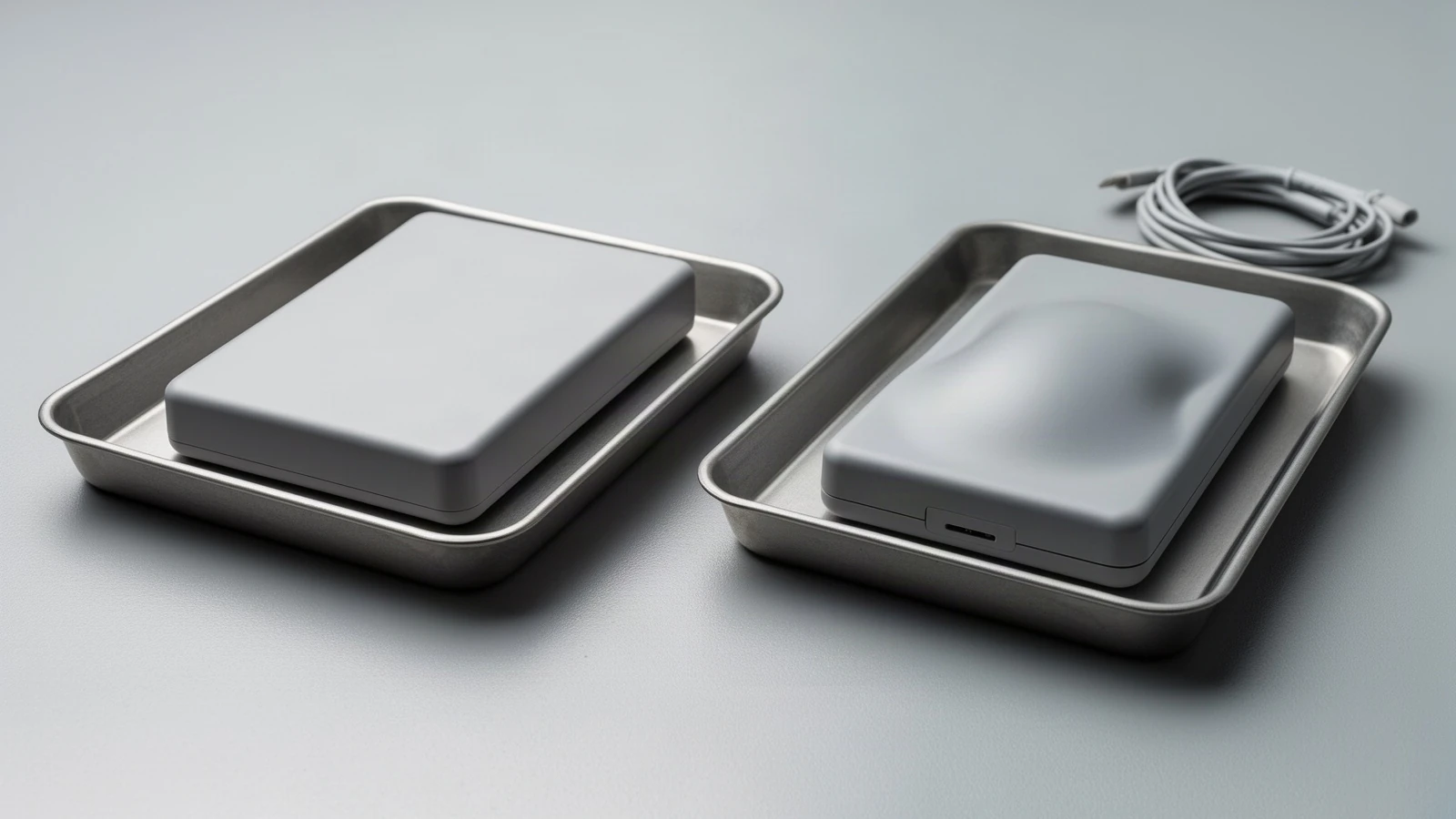
| Swollen, hot, leaking, punctured, burned, or recalled | Do not ship casually or place in a public drop box. Contact manufacturer, local fire-safe HHW program, or recycler for damaged-battery instructions |
| Large pack or portable power station | Check The Battery Network or local HHW acceptance details before drop-off; size limits vary by site |
Prepare A Normal Battery For Drop-Off
EPA recommends protecting terminals and keeping batteries separate. For a normal old CPAP battery:
- Turn the battery off.
- Remove detachable cables.
- Cover exposed metal terminals with non-conductive tape such as electrical tape.
- Put the battery in a separate plastic bag if the recycler requests it.
- Keep it cool and dry until drop-off.
- Do not leave it in a hot car for days.
- Bring it to a battery recycler, electronics recycler, retailer takeback program, or household hazardous-waste site that accepts lithium batteries.
The Battery Network, formerly Call2Recycle, operates a locator for drop-off sites. Its locator page says to check each location’s details before visiting because some sites accept only common household batteries while others accept specialty or high-energy batteries.
Call before bringing a large CPAP battery or portable power station. A small under-100Wh CPAP pack may be accepted at more locations than a 500Wh power station. Damaged packs may need a different process entirely. A five-minute call can prevent a wasted trip and a battery sitting in your car.
Do not tape over the label. The recycler may need to see chemistry, watt-hours, model, or safety markings. Cover exposed contacts, not the information that identifies the pack.
What To Do With A Swollen Or Damaged Battery
A swollen CPAP battery is not a normal recycling item. Do not press it flat, puncture it, open the case, keep using it, or mail it in a random box.
Only move it away from bedding, paper, and other combustibles if there is no imminent threat and you can do so without handling risk. Do not charge it. Contact the manufacturer, your local household hazardous-waste program, or a battery recycler and say clearly that the pack is swollen, damaged, leaking, hot, burned, or recalled.
EPA notes that damaged lithium-ion batteries require specific handling information and that used batteries can still injure or start fires. Do not remove an embedded pack or casually mail a damaged battery; avoid a public drop box until you have instructions. If the pack is smoking, burning, or presents an imminent fire risk, leave it alone and call 911.
Why Curbside Recycling Is The Wrong Place
Curbside recycling is built for common recyclables, not hidden energy storage. During collection and sorting, a battery can be crushed, punctured, or shorted against metal. EPA specifically warns against putting lithium-ion batteries in household garbage or recycling bins because damage during transport or sorting can create a fire hazard.
That applies even if the battery looks like a consumer gadget. A CPAP battery is still a rechargeable lithium battery.
Manufacturer And Retailer Takeback
Some manufacturers, electronics retailers, and battery programs offer takeback paths. These can be useful when the pack is specialty equipment or when a recycler locator does not clearly list your product type. Check the manufacturer support page first for direct-sale CPAP batteries and power stations.
For Amazon or marketplace purchases, do not assume the seller handles end-of-life batteries. The brand, manufacturer, or local hazardous-waste program is usually a better starting point than a random marketplace storefront.
If the battery is part of a warranty replacement or recall, follow the written instructions from the manufacturer. Recalled lithium batteries can have special handling rules.
Keep A Disposal Record
For a medical-adjacent backup kit, record the product name, capacity, purchase or first-use date if known, retirement reason, disposal location, and drop-off date.
This is useful if a caregiver or spouse later finds another battery and does not know whether it is active, retired, or unsafe.
Replace Before Disposal Becomes Urgent
Do not wait for a battery to fail during an outage. Retire or investigate it if it is swollen, cracked, leaking, smells unusual, gets unusually hot during charge or discharge, or shuts off under normal CPAP load. Also remove it from service if runtime has dropped materially from your documented baseline, ports are loose or burned, or the manufacturer recalls the model.
For batteries kept as outage equipment, review them at the same time you do the monthly charge check. If a pack is no longer reliable enough for sleep, remove it from the kit immediately so nobody grabs it during a storm. When you shop for the replacement, the battery finder narrows current models to ones that match your machine and use case before the old pack goes to drop-off.
Bottom Line
Recycle CPAP batteries through a battery recycler, electronics recycler, manufacturer program, retailer takeback, or household hazardous-waste site. Tape terminals, keep packs separate, and treat damaged batteries as a special case. Do not put lithium CPAP batteries in trash or curbside recycling.
Sources
- EPA Used Lithium-Ion Batteries (regulator; retrieved 2026-09-01)
- EPA Frequent Questions on Lithium-Ion Batteries (regulator; retrieved 2026-09-01)
- The Battery Network drop-off locator (organization; retrieved 2026-09-01)