Using a CPAP on a Cruise Ship: Power, Distilled Water, and Battery Prep
Plan CPAP power for a cruise ship with line-specific extension-cord, distilled-water, battery, and carry-on checks.
By Max · Published July 25, 2026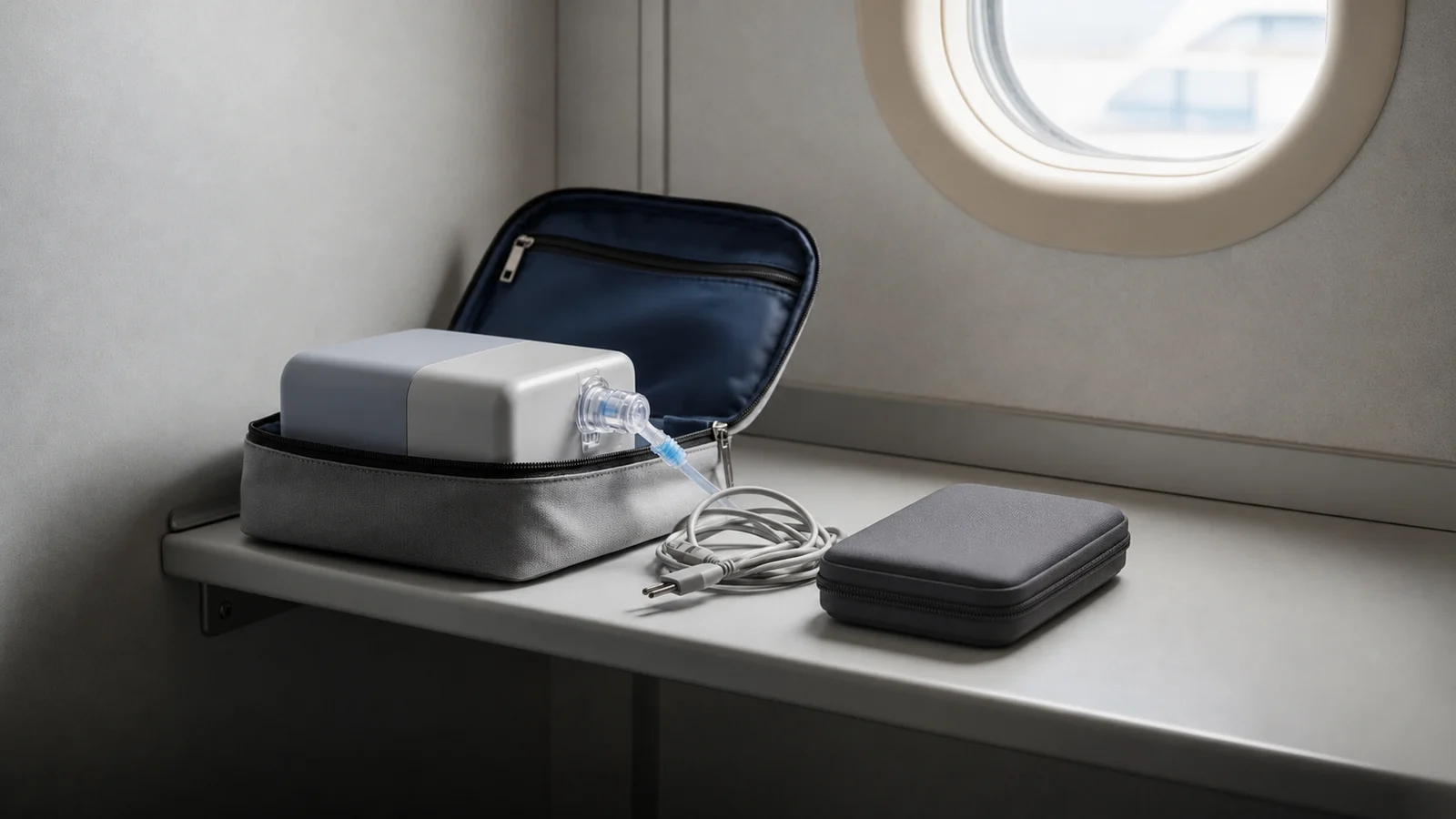
This is backup-power planning information, not medical advice. Follow your device manufacturer's instructions and ask your care team about treatment decisions.
Cruise CPAP planning is mostly an accommodation problem, not a shopping problem. The safest plan is to tell the cruise line before sailing that you use a CPAP or BiPAP, ask how they handle distilled water and bedside power, pack the machine in your carry-on, and avoid bringing electrical accessories the line may confiscate.
The mistake is assuming a hotel-room packing list works on a ship. A harmless-looking extension cord, outlet splitter, or power strip can be treated differently by each line. Bring the CPAP, mask, hose, power supply, and a backup battery if you need one, but let the line’s access or special-needs team tell you what is allowed for cabin power.
The Short Cruise Checklist
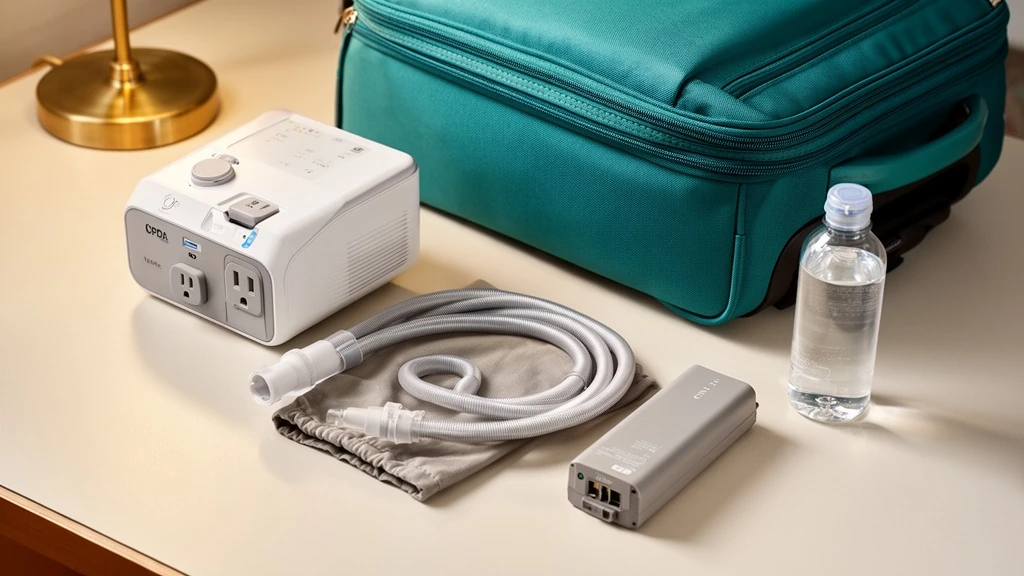
Do these before you buy anything for the trip:
- Find your cruise line’s accessibility or special-needs form.
- Request CPAP/BiPAP accommodation, distilled water if you use a water chamber, and bedside power support if the outlet is not near the bed.
- Ask whether the ship provides an extension cord or whether you may bring one.
- Pack the CPAP machine, mask, hose, power brick, and any medically necessary water in carry-on luggage.
- Do not pack a surge protector, power strip, multi-plug outlet, or random extension cord unless the line’s current policy specifically allows it.
- Bring a battery only as a fallback for outages, embarkation delays, or a cabin-layout problem, not as a substitute for arranging ship power.
Do this by the deadline listed on the cruise line’s current special-needs page. If there is no clear deadline, submit the request as soon as the cabin is booked. The goal is to have distilled water, power support, and any approved cord path arranged before embarkation.
Keep the CPAP bag with you during boarding. Checked bags can arrive hours after you board, and the machine should not be sitting in a hallway cart if you need it for a nap, a delayed departure, or the first night.
Line Rules Are Not The Same
Royal Caribbean’s current prohibited-items FAQ says electrical items not designed for personal grooming, including extension cords, power strips, and multi-plug outlets, are prohibited unless reviewed or covered by a stated exception. Its special-needs form separately says that for a CPAP/BiPAP machine, distilled water and an extension cord will be provided in the stateroom. That combination matters: do not assume “I use a CPAP” means you can bring your own extension cord. The cleaner path is to request the accommodation.
Carnival’s help page is different. It says CPAP machines need to be packed in carry-on luggage, Carnival carries distilled water for CPAP machines for pre-cruise or onboard purchase, and guests bringing their own distilled water must hand-carry it with the CPAP machine. Carnival’s prohibited-items section also says some electrical items, including extension cords without surge protectors, are allowed when used with caution but can be removed if considered hazardous.
The practical takeaway: make a line-specific plan. Do not reuse a Royal Caribbean answer for Carnival, or a Carnival answer for Norwegian, Princess, Celebrity, Holland America, or MSC.
Rules can also change by ship and itinerary. A policy page from a forum, a prior sailing, or a travel agent may be useful background, but the line’s current page and access team should drive your plan. If a rule affects whether you can sleep with CPAP, get the answer from the cruise line rather than a generic packing checklist.
Cruise-Line Policy Table
The current pages below show why one packing rule does not fit every line. This table was checked on September 1, 2026. Recheck the linked policy before sailing because notice windows and prohibited-item lists can change.
| Cruise line | Cabin power and cord policy | Distilled water or CPAP request | Battery guidance |
|---|---|---|---|
| Carnival | Its help pages allow some extension cords without surge protection, subject to safety review. (Carnival, checked September 1, 2026) | Distilled water is available for pre-cruise or onboard purchase. Bring your own water with the CPAP in carry-on luggage. | Use the flight rules for a spare lithium battery and ask Carnival about any ship-specific restriction. |
| Royal Caribbean | Extension cords, power strips, and multi-plug outlets are on the prohibited-items list unless the special-needs process covers the request. (Prohibited items, checked September 1, 2026) | Distilled water and an extension cord are listed as equipment requiring advance notice. (Equipment list, checked September 1, 2026) | No separate CPAP-battery rule was located in the cited policy. Ask the line before boarding. |
| Norwegian | Bring an approximately six-foot extension cord without a surge protector. An unsafe cord may be held during screening. (NCL, checked September 1, 2026) | Request distilled water at least four days before sailing or at Guest Services onboard. | Check the line’s current prohibited-items policy and carry spare lithium batteries in the cabin on the flight. |
| MSC | Accessibility guidance says extension cords are available onboard. Confirm the current process before sailing. (MSC, checked September 1, 2026) | Complimentary distilled water is listed as available onboard. | No line-specific CPAP-battery rule was located in the cited policy. Ask MSC directly. |
| Princess | Staterooms have standard 110 V and 220 V outlets. Medical equipment and cords can be checked for electrical safety. (Princess, checked September 1, 2026) | Request distilled water when making the reservation. | Carry the CPAP and power supplies in hand luggage and verify battery treatment before sailing. |
| Celebrity | The CPAP FAQ asks guests to notify the line when distilled water and an extension cord are needed. (Celebrity, checked September 1, 2026) | Give notice at least 30 days before sailing. | No separate CPAP-battery rule was located in the cited FAQ. Ask Celebrity. |
| Disney | Submit the Special Services Information Form for medical requests. (Disney, checked September 1, 2026) | Confirm distilled-water delivery and any cord arrangement through Special Services. | Disney’s battery FAQ says undamaged batteries can be brought onboard. (Disney batteries, checked September 1, 2026) |
| Holland America | Standard 110 V and 220 V outlets are listed. Extension cords without surge protectors and some power strips are allowed with caution. (Electrical appliances, checked September 1, 2026) | Order distilled or purified water through Manage My Cruise, or bring it within the published six-liter stateroom allowance. (Water FAQ, checked September 1, 2026) | Ask Holland America how its current ship policy applies to your battery. |
The battery column is intentionally cautious. The cited line pages do not establish eight separate CPAP-battery rules. For a spare lithium battery, follow the FAA lithium-battery guidance and FAA/TSA flight guidance, protect the terminals, keep it accessible, and ask the cruise line about boarding. A community report is not a substitute for the line’s current policy.
This is especially important for batteries and outlet accessories. A battery that is allowed through airport security may still raise questions at cruise boarding if it is large, damaged, unlabeled, or part of a portable power station. A power strip that worked in a hotel can be confiscated on a ship.
What To Request From The Cruise Line
Use direct, boring language:
I use a prescribed CPAP/BiPAP machine at night. Please confirm how to arrange distilled water and safe bedside power in my stateroom. If an extension cord is needed, please confirm whether the ship provides one or whether I may bring a specific approved type.
Then ask the practical follow-ups. You need to know whether distilled water will be provided, purchased, or delivered to the room, whether an outlet is close enough to the bed, and whether the ship provides an extension cord if the outlet is too far away. If you plan to bring a battery or portable power station, ask about cabin rules and watt-hour limits. Also ask whether the CPAP should be tagged or inspected during boarding.
Save the reply offline. A screenshot is useful if the boarding staff or guest services desk needs to see what was arranged.
Ask one more question if the cabin has limited outlets:
If the bedside outlet is not close enough for the CPAP power supply, will the ship provide an
approved extension cord, and will it be in the stateroom before the first night?
That question matters because the CPAP power brick and hose path should not create a trip hazard. A cord stretched across the room can be unsafe for you, cabinmates, and housekeeping staff.
If you use a humidifier, also ask how distilled water is delivered and whether it is free, purchased, or brought by the guest. Some lines sell distilled water. Some provide it when requested. Some require advance notice. The answer affects what you pack and whether you need to hand-carry water during boarding.
Battery Planning For A Cabin
A battery can help with a short outage, an unexpected cabin outlet issue, or a night where an extension cord is not delivered on time. It should not be the only plan for a multi-night cruise unless you have done the math and have a reliable way to recharge it.
Use the same runtime method as a home outage. Start with machine load in watts, humidifier and heated hose state, and whether the connection path is AC inverter or direct DC. Then account for usable capacity after conversion loss, reserve for battery aging and storage conditions, and the number of nights before you can recharge.
For example, a travel CPAP with no heated humidifier may be realistic on a small under-100Wh battery for one night. A full-size CPAP or BiPAP with heated humidity can consume several times more energy, especially through an AC outlet. If you need more than one night, calculate it before sailing and keep the cruise-line accommodation as the primary plan. The runtime calculator runs that math with your machine, humidifier setting, and connection path, and the multi-night planner covers the trip legs where recharging is uncertain.
A cruise battery plan has three different jobs:
| Job | What the battery covers |
|---|---|
| Boarding day | Delayed luggage, missed water delivery, or late cabin setup |
| Cabin issue | Outlet location, missing cord, or short power interruption |
| Travel legs | Flight, hotel, rideshare, or overnight transit before and after the cruise |
The ship cabin should not be treated like remote camping. You usually have access to AC power once the accommodation is handled. That makes a compact battery a fallback tool, not the main energy source for the whole sailing.
If the battery will be used before and after the cruise, check both sets of rules. Air travel uses watt-hour limits and carry-on packing. Cruise boarding focuses on line-specific electrical and safety rules. Passing one gate does not guarantee the other.
What Not To Pack
Do not pack a surge protector. Many cruise lines prohibit them because they can create shipboard electrical risk. Also be careful with compact outlet splitters and multi-plug adapters. Royal Caribbean now names multi-plug outlets in its prohibited electrical list.
Avoid anything with unclear markings. If you need a medical accommodation, the ship’s approved extension cord or access-team process is less risky than hoping a third-party cord passes screening.
Also avoid packing a large power station without checking the line. Even if it is useful at home, a large battery with an AC inverter may be treated differently from a compact CPAP backup pack. If the line allows batteries only under certain conditions, you need those conditions before boarding.
Do not pack distilled water in checked luggage unless the line explicitly tells you to do so. Leaks can damage luggage, and some lines want medical water hand-carried with the CPAP. If the line sells or provides distilled water, using that process is often easier than carrying heavy bottles.
Do not bring a homemade cable setup or an unlabeled adapter. Ship staff cannot evaluate a mystery power accessory at boarding. The original CPAP power brick, manufacturer-approved cable, and line- provided extension path are easier to defend.
Boarding-Day Setup
When you enter the cabin, set up the CPAP before dinner, not at bedtime. Confirm the outlet location and plug in the power supply without stretching the cord across a walking path. Check the humidifier water plan while guest services still has time to fix a missed delivery.
If you brought a battery, put it where bedding or clothing will not cover it. Do not charge a battery on a bed, under a pillow, or inside a closed bag. If anything is missing, contact guest services while the access team still has time to respond.
Run the machine for a few minutes in the cabin. Listen for power interruptions, check that the hose reaches comfortably, and confirm the mask and tubing survived travel. If you use a heated humidifier, fill it only after the machine is stable and placed where movement will not spill water.
If the extension cord creates a walkway hazard, ask guest services for a safer placement. Do not tape random cords across the floor or route cables under rugs. Cabin safety matters because housekeeping, room service, and cabinmates may move through the area in low light.
Keep a small towel or tray under the water chamber only if it does not block ventilation. The goal is spill control, not covering the machine.
When To Use A Battery On A Cruise
Use a CPAP battery when it solves a defined problem:
| Situation | Battery role |
|---|---|
| Outlet is not near the bed on night one | Temporary fallback while guest services handles power |
| Short shipboard power interruption | Short backup |
| Travel CPAP without heated humidifier | Possible one-night backup after runtime math |
| Full-size CPAP with heated humidity | Usually needs larger capacity or humidifier-off planning |
| BiPAP/ASV | Size conservatively. Small travel batteries may not be enough |
Do not use a battery to avoid contacting the cruise line. A ship cabin is a shared electrical environment, and the line’s safety rules still apply.
If you use the battery during the cruise, recharge it during the day on an approved outlet path and keep it visible while charging. Do not leave a charging pack buried in luggage or bedding. Follow the manufacturer’s temperature and ventilation instructions.
For a long itinerary, record whether the battery was used and whether it was recharged. A battery used on night one and forgotten may not be ready for a port hotel, delayed flight, or final travel day.
Port Days And Pre-Cruise Hotels
The cruise line solves only the ship portion of the trip. If you sleep in a hotel before sailing, confirm that your normal power brick, outlet adapter if international, and battery charger are in the carry-on. If you fly internationally, check plug shape and voltage support on the CPAP power supply. Most modern CPAP power bricks accept 100-240V AC input, but you still need the correct plug adapter.
For port excursions, keep the CPAP in the cabin unless you need it medically during the day. A backup battery left in a hot tour bus or beach bag is a bad storage plan. Heat can age lithium batteries and can create safety issues.
If the trip includes air travel, read the battery’s Wh label before packing. A cruise-safe battery is not automatically flight-safe if it exceeds airline lithium limits.
Final Prep List
Pack the medical equipment in your carry-on: the CPAP or BiPAP machine, mask, hose, filters, spare cushion, original power supply, and any manufacturer-approved DC cable. The printable go-bag checklist covers the same packing job sheet by sheet. Add the battery only if you have calculated that it helps. Keep a copy or screenshot of the line’s CPAP accommodation reply, and bring distilled water only if the line allows or requires you to hand-carry it.
The right cruise plan is simple: request accommodation early, obey the electrical list, set up the machine before bedtime, and use the battery only for the specific gap it covers.
Sources
- Royal Caribbean prohibited items FAQ (regulator; retrieved 2026-09-01)
- Royal Caribbean guest special needs form (regulator; retrieved 2026-09-01)
- Royal Caribbean accessible cruising equipment (manufacturer; retrieved 2026-09-01)
- Carnival Cruise Line help page for CPAP distilled water and prohibited items (regulator; retrieved 2026-09-01)
- Norwegian Cruise Line traveling with C-PAP (manufacturer; retrieved 2026-09-01)
- MSC Cruises Accessibility and Medical Requests (manufacturer; retrieved 2026-09-01)
- Princess Cruises Pre-cruise FAQ (manufacturer; retrieved 2026-09-01)
- Celebrity Cruises All FAQs (manufacturer; retrieved 2026-09-01)
- Holland America Electrical Appliances FAQ (manufacturer; retrieved 2026-09-01)
- Holland America Distilled or Purified Water FAQ (manufacturer; retrieved 2026-09-01)
- Disney Cruise Line Guests with Medical Conditions (manufacturer; retrieved 2026-09-01)
- Disney Cruise Line battery guidance (manufacturer; retrieved 2026-09-01)
- FAA PackSafe lithium batteries (regulator; retrieved 2026-09-01)